Orland Park Epoxy Flooring brings more than 20 years of epoxy flooring work to Riverdale, and on a heavy-industry floor the first thing we settle is which parts of the slab should not be coated at all. A floor coating does its best work where loads roll and people walk. Where heavy steel lands, it is the wrong tool, and we would rather say so before the proposal than after the first chip.
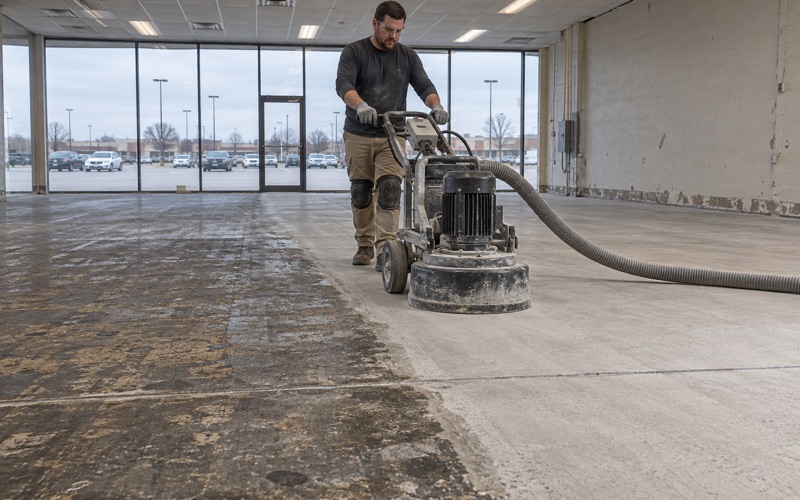
That decision shapes the rest of the scope. We map the slab, mark where heavy parts are set down, and plan coated aisles, walkways and bench areas around those zones. Then we open the coated areas with a diamond grinder or a shot blaster, test the slab for moisture, and write the product line, the coat count and the finished thickness into the quote so the floor can be checked against it.
The same thinking carries into smaller spaces. A home garage where an engine hangs on a stand, or where a car sits on jack stands for a month, has its own version of the problem at a smaller scale, and we cover that further down the page.
A Steel-Roll Shop on Halsted Street
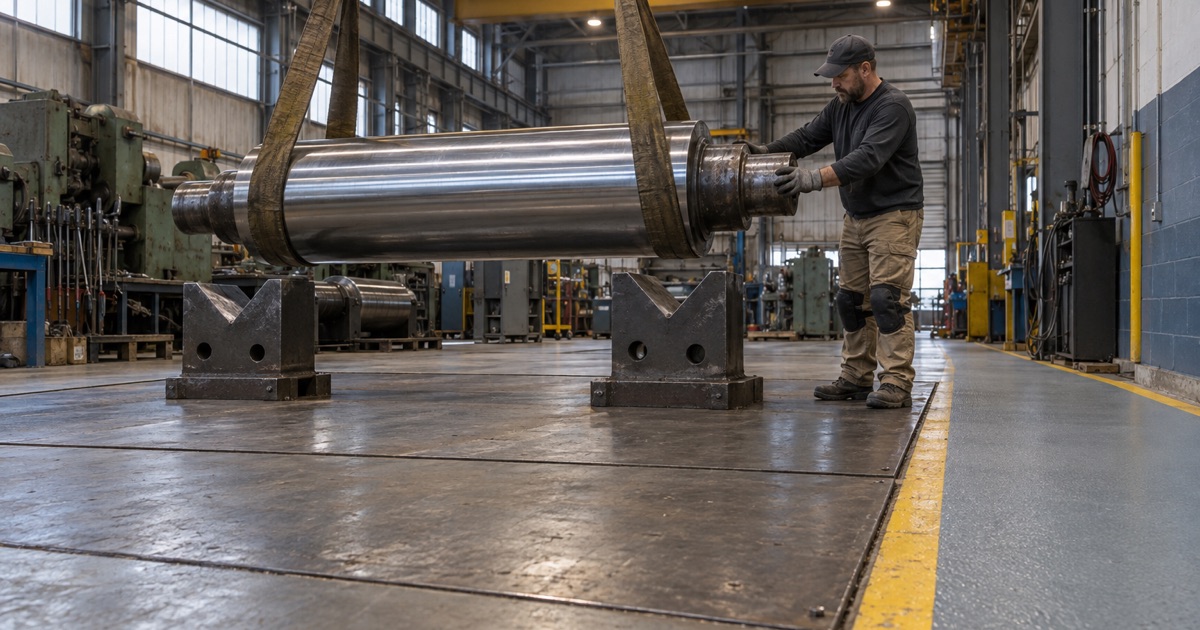
Rolls built and rebuilt in Riverdale
Riverdale, a village in Calumet Township, Cook County, still has a plant that makes the rolls steel mills run on. Bonell Manufacturing, at 13521 South Halsted Street, makes forged steel, iron and non-ferrous rolls and has been in business for over 70 years by its own account. Roll repair and reconditioning are a specialty there, and American Roller acquired the company in January 2023.
We have not worked inside that plant and have not seen its floors, cranes or lay-down practice. We name it because it is a clear local picture of the heaviest kind of load a slab can take. The mechanics it illustrates apply to any shop that sets heavy steel parts down on concrete, whatever that shop makes.
What the published capacities say
Bonell lists its dynamic balancer as able to support rolls up to 82 inches in outside diameter and 600 inches between centers, at up to 70,000 pounds. Six hundred inches is 50 feet of length. That is a rated machine capacity, not a statement about what crosses the floor on a given day, but it tells you the scale of part a roll shop is built to handle.
A part of that size does not roll in on casters. It travels overhead on a crane and comes down onto stands, cradles or V-blocks, and those last few inches of travel are where a shop floor is won or lost. Everything we plan for a heavy-load floor starts from that moment of contact.
Looking for epoxy-flooring closer to Summit? See Epoxy-Flooring Services in Summit.
Seventy Thousand Pounds on a Few Square Inches
The set-down moment
When a crane lowers a heavy roll, the load does not arrive as a gentle, even pressure. Steel meets the support, the support meets the floor, and for an instant the slab takes an impact through a very small footprint. A slight swing, a hook that pays out a little fast, or a stand that rocks before it settles can concentrate that hit onto one edge or corner.
Concrete handles that better than most people expect, because the load spreads down into the slab and the base beneath it. A thin film sitting on top has no depth to spread into. It is the first layer between the steel and the concrete, and it takes the blow right at the surface.
Stands, V-blocks and contact points
Once the roll is sitting, the problem shifts from impact to sustained pressure. A V-block or a roll stand carries its share of the weight through feet or a base plate, and the smaller those contact points are, the higher the pressure under each one. Forklift and pallet jack wheels spread a load across a moving patch, while a stand foot concentrates it in one place for as long as the part sits there.
Sliding makes it worse. Stands get nudged into position with a pry bar, cradles drag slightly as a roll is turned, and steel feet scraping across a coated surface behave like a chisel. That mix of point pressure and lateral drag is the reason we treat lay-down areas as their own category of floor rather than as part of the aisle.
Where Coatings Crush and Chip First
Thin film under a point load
A thin-film coating, the rolled-on kind sold for light-duty floors, is measured in mils. Under a concentrated steel load it can crush in place, crack outward around the contact point, or lose bond at the edge of a chip and begin peeling from there. Once an edge lifts, wheel traffic and cleaning water work underneath it and the damage spreads.
No floor coating survives repeated steel-roll set-down unharmed, and none is built for it. A promise to the contrary is a slogan, not a specification. What a floor system can do is resist the loads it was chosen for, in the places it was chosen for, and that is a layout decision as much as a product decision.
Thicker systems and their limits
Thicker systems move the line without removing it. A 100% solids epoxy built up with a quartz aggregate broadcast, or a troweled urethane cement, carries far more body than a thin film and holds up much better to dropped tools, carts and pallet traffic. Under a steel stand that is shifted and reset week after week, even those systems will wear and chip at the feet.
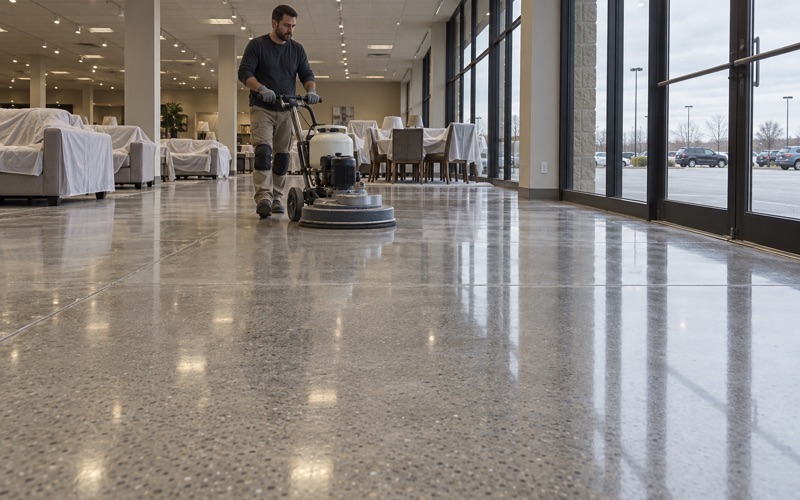
Bond decides how a chip behaves once it happens. A coating laid over an acid-etched or poorly profiled slab tends to let go in sheets around a damaged spot. That is why we open the slab mechanically, by diamond grinding or shot blasting to a suitable ICRI concrete surface profile, so a chip stays a small repair instead of turning into a delaminated patch.
Mapping the slab before pricing
Before we price a shop floor, we walk it with the people who run the crane and the forklifts. We map cracks, spalls, old coatings and patched areas, and we ask where parts are actually set down rather than where a drawing says they should be. If a section of slab is too damaged to coat, we say so and recommend repair or replacement first.
Moisture testing is written into the scope before the price is final, using ASTM F1869 calcium chloride tests or ASTM F2170 in-situ relative humidity probes depending on the slab. Moisture is also the first exclusion we explain in a coating warranty, so you know what the warranty leaves out before you sign anything.
Lay-Down Zones, Plate, Aisles and the Home Shop
Leaving lay-down areas bare or armored
In a heavy-roll shop, a common approach is to leave lay-down and machine-foundation zones as bare concrete, armor them, or cover them with steel plate or timber dunnage that takes the hit and can be replaced. A lithium silicate densifier can harden and dustproof bare concrete in those zones without adding a film that could chip. We mark these areas on the plan so the line between coated and uncoated floor is deliberate.
Steel plate and dunnage are not our product, and we do not pretend otherwise. We plan around them, end the coating with a clean edge where they begin, and leave room for them to be moved or swapped out without tearing up the coated floor beside them.
Coating the aisles, walkways and bench areas
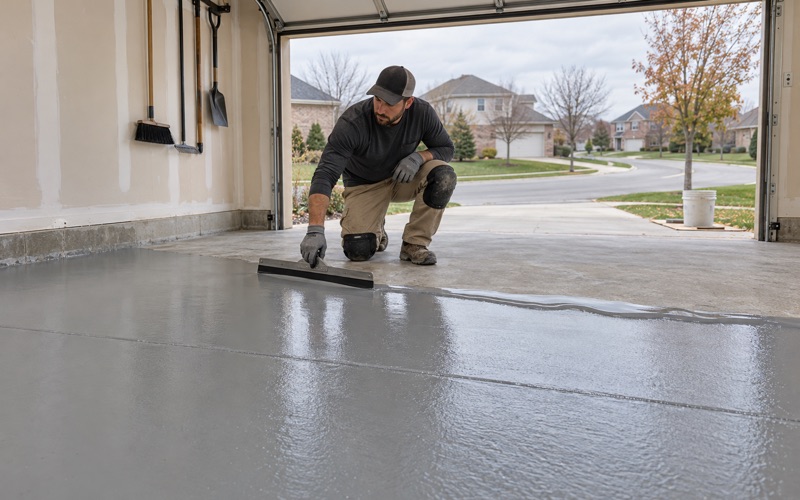
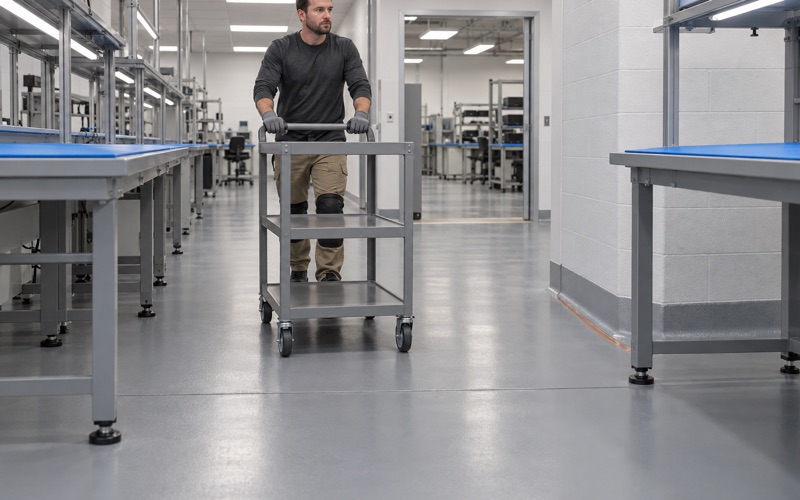
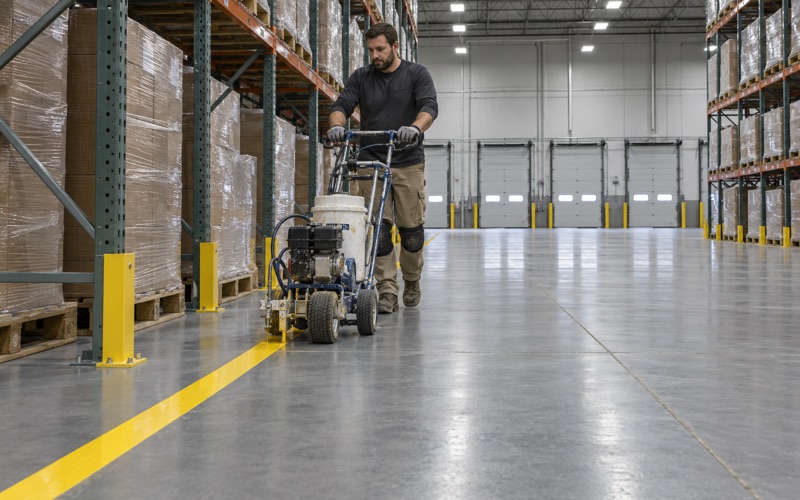
Aisles, walkways and bench areas are where a coating earns its cost. Those surfaces take forklift and pallet jack wheel loads, foot traffic, dropped hand tools and routine cleaning, and a well-bonded system makes them easier to sweep, easier to light and easier to mark. Contrasting colors and striping can show exactly where a lay-down zone begins, which helps keep heavy parts off the coated surface.
Slip resistance in those aisles comes from the broadcast and topcoat we specify, such as a quartz broadcast locked in with a polyaspartic or urethane topcoat, not from a line on a sales sheet. Grinding dust is captured at the machine with a vacuum, and when a shop cannot shut down, we phase the work into overnight or weekend windows.
Heavy point loads in a Riverdale home shop or garage
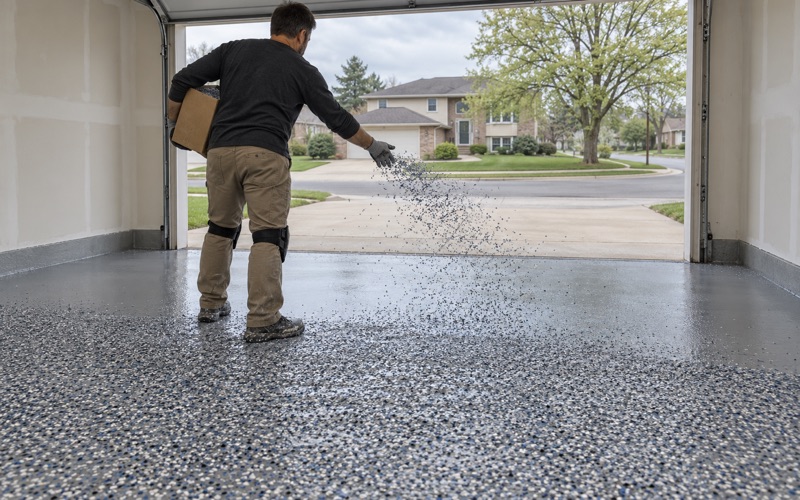
The same mechanics show up at home on a smaller scale. A car on jack stands for a long project, an engine on a stand, a floor jack pumped in the same spot, or a heavy welder or compressor on small feet all press into the floor through a few contact points. A thin decorative coating can dent, scuff or chip under those, especially where a stand gets dragged into place.
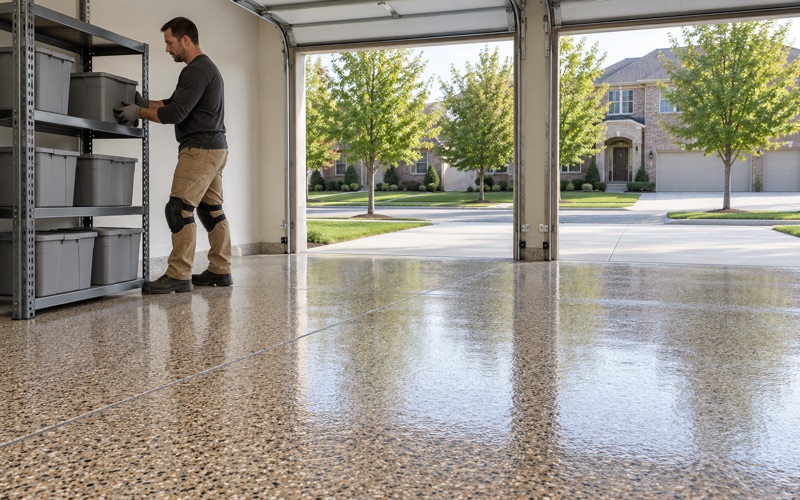
For a home shop, we lean toward a full vinyl flake or quartz broadcast system with a tougher topcoat, and we suggest steel or plywood pads under jack stands and engine stands left in place for long stretches. Hot tire pickup is a separate garage problem that a properly cured system resists, and we set the cure schedule by slab temperature and dew point rather than by the calendar.
Floor covering appears on Riverdale’s list of minor work that does not need a permit, but we confirm a coating job with the village’s Inspectional Services, at 725 West 138th Street, before booking it. Illinois has no state flooring license, so we check the village’s own contractor registration, bond and insurance rules, and home jobs over the state threshold get a written contract and the Illinois consumer-rights pamphlet before any grinding begins.
- 20+ Years on Concrete
- Moisture Tested Before Pricing
- Written Specs on Every Quote