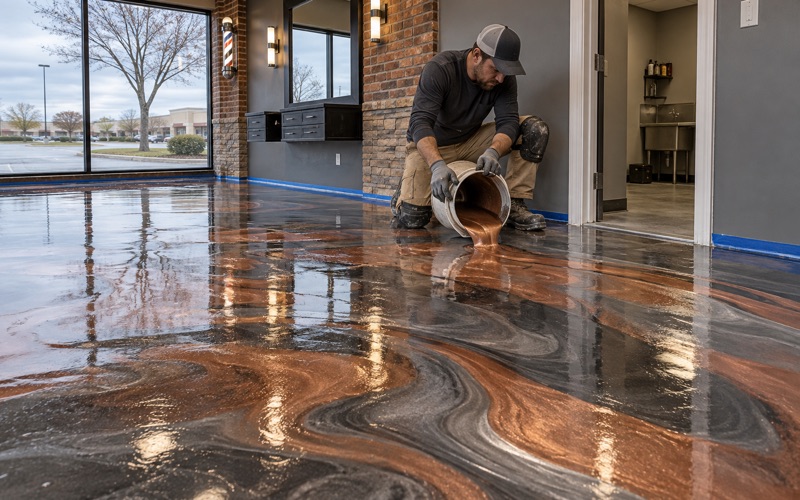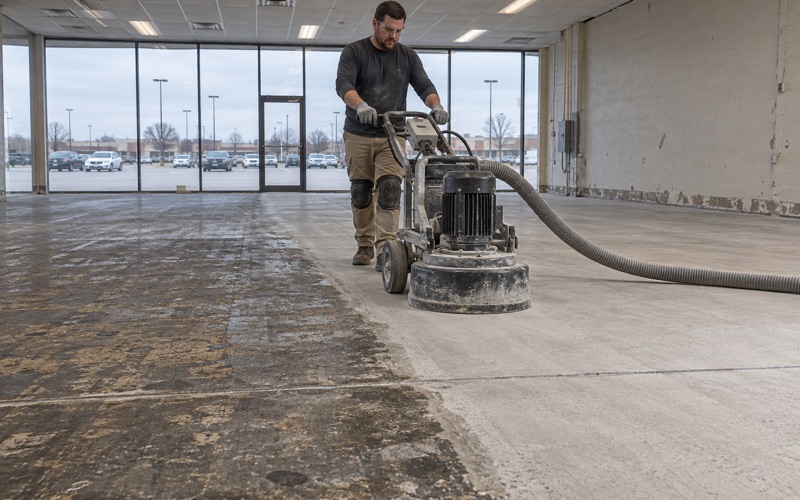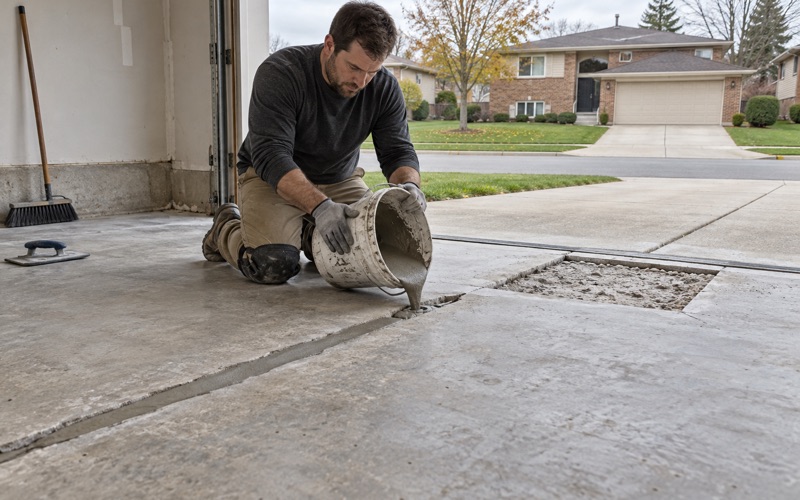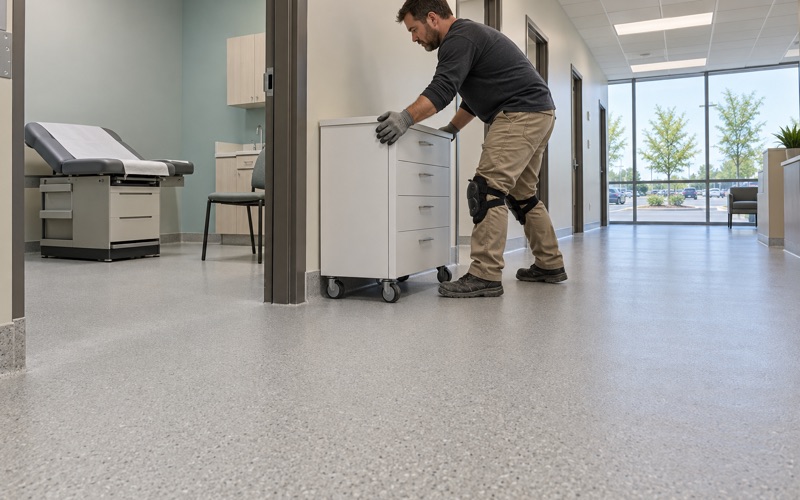
Orland Park Epoxy Flooring has spent more than 20 years installing epoxy flooring in Richton Park garages, basements and small commercial rooms, and a growing share of those calls now begin with a home gym. The question is nearly always the same: will a coated floor stand up to a squat rack, a bench and a stack of iron plates? Our honest answer is that a coating is one layer of a gym floor, never the whole thing.
Every slab we coat is opened with a diamond grinder or a shot blaster rather than an acid wash, and a moisture test sits inside the written scope before the price is settled. The proposal names the product line, how many coats go down and the finished thickness, so you can hold the cured floor up against the paper and check it.
What follows is how we plan a lifting space: where rubber belongs, where resin earns its place, and what to confirm with the village before the equipment is carried in.
A New Fieldhouse on Sauk Trail and What a Weight Room Asks of a Floor
The Rich Township High School Fine Arts and Communications Campus at 5000 Sauk Trail, the former Rich South High School, is the South campus of District 227. Pepper Construction’s project page for the district describes a new 80,000-square-foot fieldhouse there with a 200-meter indoor track, three basketball courts, batting cages, a weight room, a fitness studio and locker rooms. Southland College Prep added its own 36,000-square-foot fieldhouse with a fitness room in August 2020.
We had no part in either project, and we have not seen which floor systems those rooms use. We bring them up because a school weight room is the clearest public example in the village of how a lifting floor is planned, and the same logic scales down neatly to a two-car garage or an unfinished basement.
A Weight Room Is Planned in Zones
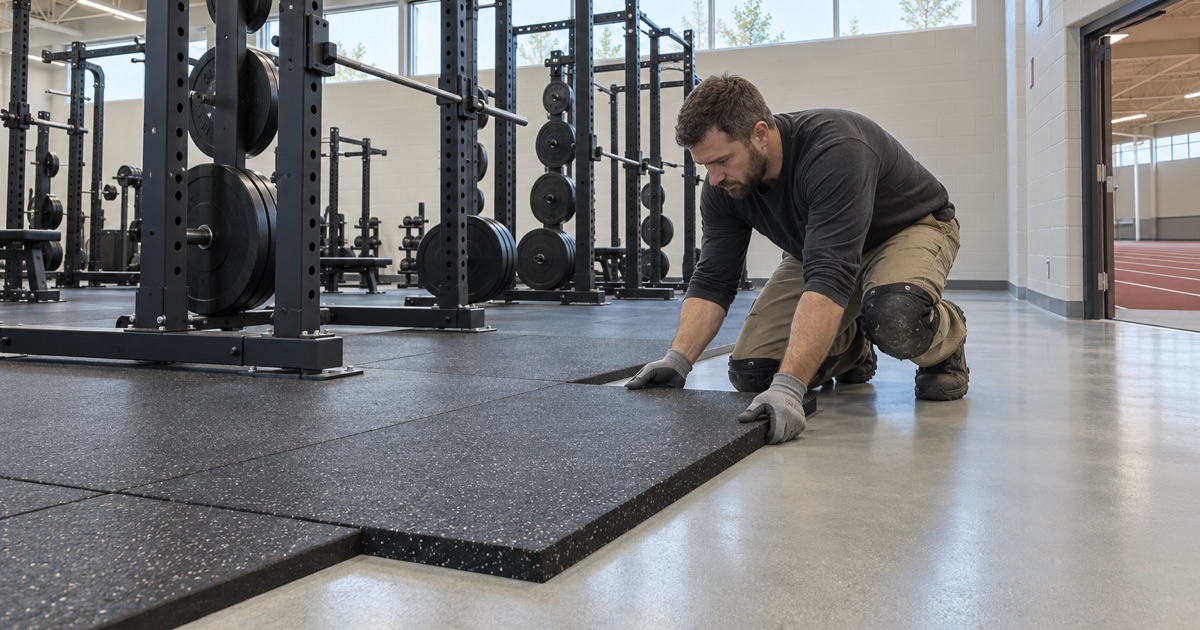
A weight room is not one floor but several. The lifting platforms, the dumbbell rack and the area in front of it are where loaded weight comes down, so they get thick rubber flooring or dedicated platforms. The aisles, the cardio corner and the space around the benches carry foot traffic, rolling equipment and cleaning, and that is where a coated or sealed concrete surface does its work.
Planning a home gym the same way keeps the budget honest. Instead of asking one product to do everything, you decide where each kind of load lands and pick the right surface for each zone. On most of the residential gyms we see, the rubber covers a modest footprint and the coating carries the rest of the room.
A Dropped Plate Is a Point Impact
When a loaded barbell or a heavy dumbbell hits the floor, the force arrives through a small contact patch in an instant. A resin coating is a hard, thin surface bonded to the concrete, and that kind of blow can chip it no matter how carefully it was installed. A coating is a surface, not a shock absorber, and we will not sell it as protection for dropped weights.
Rubber is what takes that impact. It spreads the load, quiets the room and protects both the bar and the slab beneath it. Our recommendation for any garage or basement gym is the order a weight room follows: coat the whole floor first, then set rubber under the rack, the deadlift spot and anywhere a weight will be put down hard.
Looking for epoxy-flooring closer to Evergreen Park? See Evergreen Park Epoxy-Flooring.
Coated Concrete for the Walk-Around Space
The coating’s job in a home gym is less dramatic but just as real. It has to shed sweat and spilled drinks, resist the scuffing of rolling carts and adjustable benches, and clean up easily after a hard week of training. It also brightens a gray garage and keeps concrete dust off the equipment, which matters more than most people expect once a rower or a bike lives in the corner.
Choosing the System for Foot Traffic and Carts
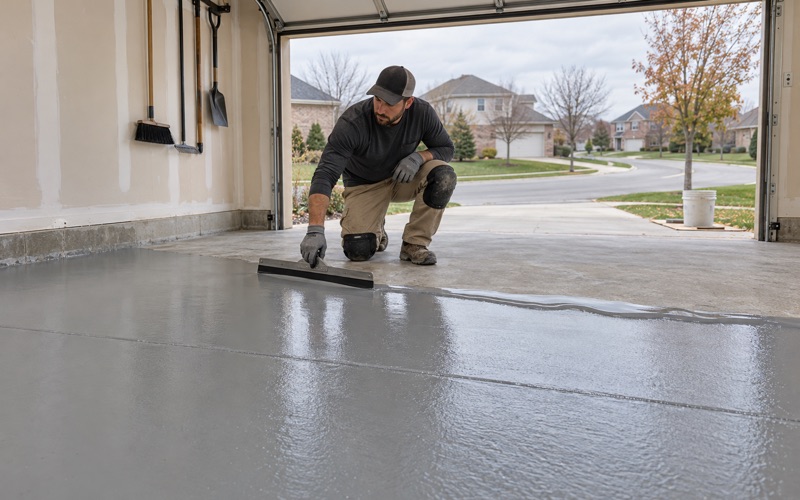
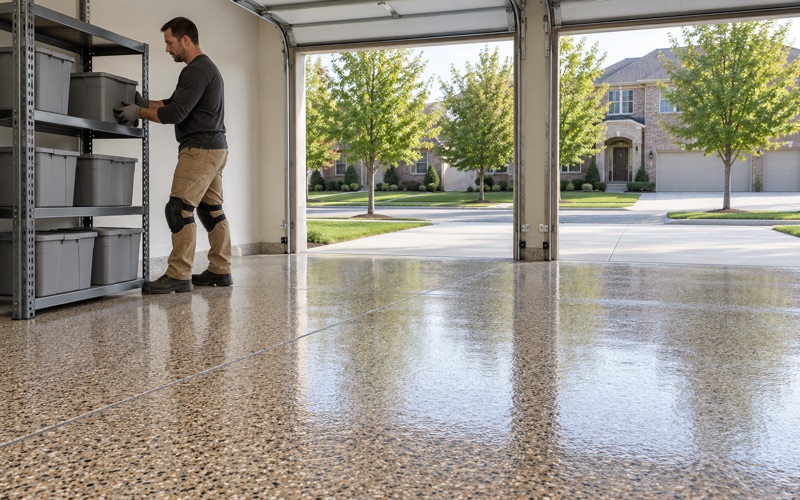
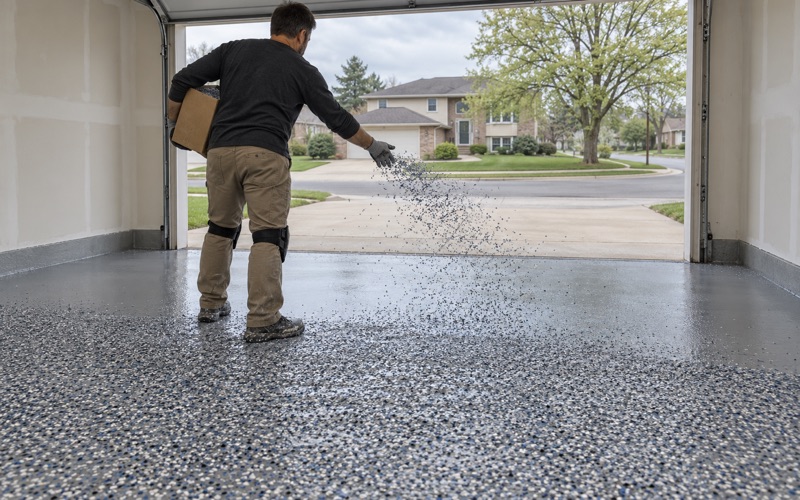
For most residential gyms we specify a 100% solids epoxy base coat with a polyaspartic topcoat, broadcast with vinyl flake or quartz aggregate. The epoxy builds the body of the floor, and the polyaspartic layer adds abrasion resistance and holds its color under the light that comes through an open garage door. Quartz suits a room that needs more grip; flake hides dust and chalk between cleanings.
Slip resistance is set by the broadcast and the topcoat we use, not promised as a slogan. A floor that will be wet with sweat or tracked with snowmelt gets a texture that bare feet and training shoes can trust, and we show you a sample of that texture before the job is scheduled so the finish matches what you expect.
When the Gym Shares the Garage With a Car
Many Richton Park home gyms share a stall with a daily driver. That changes the specification, because hot tires coming in from the road can lift a weak coating, a failure the trade calls hot tire pickup. Proper grinding and a system rated for vehicle traffic prevent it, and that is why we never skip surface preparation to shave a day off the schedule.
Winter adds a second load. Brine and rock salt ride in on tires and drip onto the floor all season, and a garage system has to hold up to that chloride without dulling or softening. We choose garage products with that exposure in mind, and we keep them inside the Illinois VOC limits for floor and industrial coatings, which bind whoever applies them.
Planning a Garage or Basement Gym in a 1970s Richton Park House
Richton Park’s housing is mostly a 1970s and 1980s stock: census estimates put 52.2 percent of homes in those two decades, with only a small share older. Among owner-occupied homes, the large majority are detached houses and most of the rest are attached. That means many of the slabs we grind here are several decades old and have lived through a lot of winters.
Reading an Older Garage Slab
Before we price a garage gym, we map the cracks, spalls and any old paint or coating on the slab. Some damage is simple to repair as part of the job; some means the concrete should be fixed or replaced before anyone coats it, and we say so plainly. A coating on failing concrete only hides the problem for a season.
Timing matters too. Our cure schedules follow the slab temperature and the dew point spread at the surface, not the calendar, because resin applied to a cold, damp slab can cloud with amine blush or bond poorly. An unheated garage in deep winter is usually told to wait for warmer weather, and we would rather lose a few weeks than lose the floor.
Testing a Basement Slab for Moisture
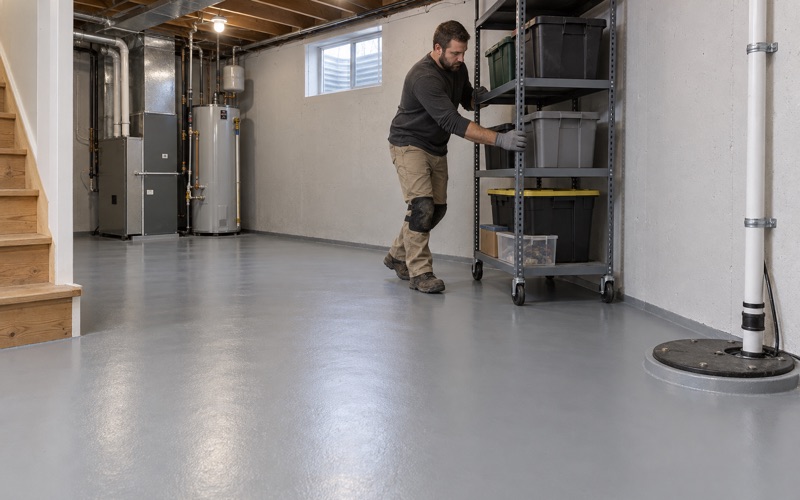
Basements are where moisture decides the outcome. We test before the price is final, using an ASTM F2170 in-situ relative humidity probe or an ASTM F1869 calcium chloride test, and an ASTM D4263 plastic sheet test as a quick screen. If the readings run high, a moisture-mitigation primer goes into the scope, or we tell you the slab is not ready for a coating.
We also explain what a coating warranty leaves out before the job is sold, and moisture is the first exclusion we name. A floor coating is not flood protection or waterproofing, and it is never sold as radon reduction, because in Illinois that is licensed mitigation work. If water or radon is the real concern, that needs its own fix first.
Laying Out the Room
Once the slab is sound, we sketch the gym with you: where the rack goes, where the lifting spot sits, where the cardio equipment and storage will live. That layout decides where rubber goes and how much of the room the coating has to carry, and it keeps the expensive rubber footprint as small as the training actually needs.
Mats, Stains and Permits Before the Rack Goes In
The last few decisions happen after the coating cures but before the equipment arrives, and they are the ones people most often skip. Two questions matter most in Richton Park: what the rubber will do to the finished surface over time, and what the village wants to see before any concrete or flooring work begins.
Rubber Mats Can Stain a Finished Floor
Some rubber mats leave a permanent stain on a finished floor. The documented cause is a chemical reaction between antioxidants in the rubber and plasticizers in the flooring, and once it happens it does not wash out. That research concerns vinyl floors; on resin coatings the result depends on the topcoat, and reports go both ways.
Our advice is simple. Buy mats with a non-staining backing where you can, and before the full set goes down, leave one mat on an out-of-the-way corner of the cured floor for a while and check underneath. A small test patch costs nothing, and it is far easier than living with yellowed rectangles under every station in the room.
Where the Village Draws the Permit Line
The Village of Richton Park Building Department, at the village hall at 4455 Sauk Trail, requires a permit before any construction, alteration, addition, removal or demolition. Garages, driveways and all concrete work are on its permit list, while cosmetic improvements such as painting, wallpapering and carpeting need none. A floor coating is not named either way, so we ask the Building Department before the job is booked.
The homeowner is responsible for obtaining a permit, and the fee doubles if work starts first, so this question is worth settling early. The village says most permits are issued in two to three days. Any concrete repair or slab replacement in a garage almost certainly falls under the concrete line, and that is planned into the schedule rather than discovered halfway through.
Contractor Registration, Insurance and Your Contract
Illinois issues no state license for flooring or coating contractors, so each village’s own rules are what count. Richton Park asks every contractor working in the village to register each year, at $200 for a general contractor or $100 for a subcontractor, with a certificate of insurance and a license and permit bond. We confirm those requirements before a job goes on the calendar.
Home jobs over the state threshold also get a written contract and the Home Repair: Know Your Consumer Rights pamphlet under the Illinois Home Repair and Remodeling Act before any grinding starts. Grinding dust is captured at the machine with a vacuum, never rinsed toward a floor drain or storm inlet, so the garage is clean and ready when the rubber and the rack finally go in.
- 20+ Years on Concrete
- Moisture Tested Before Pricing
- Written Specs on Every Quote