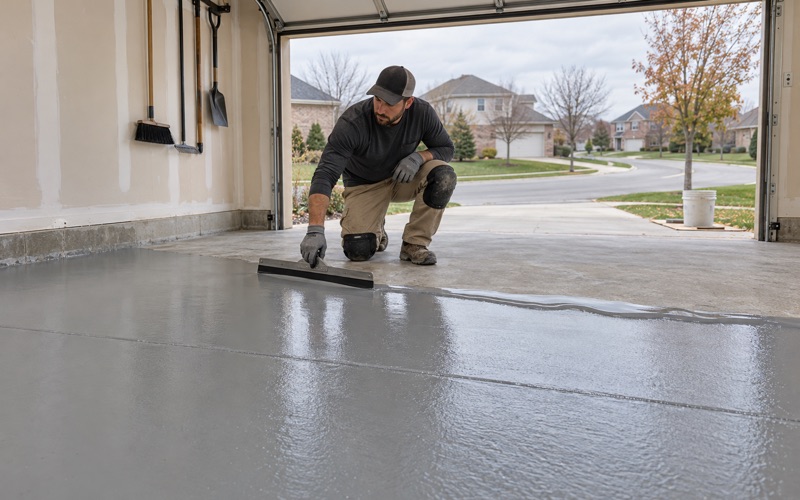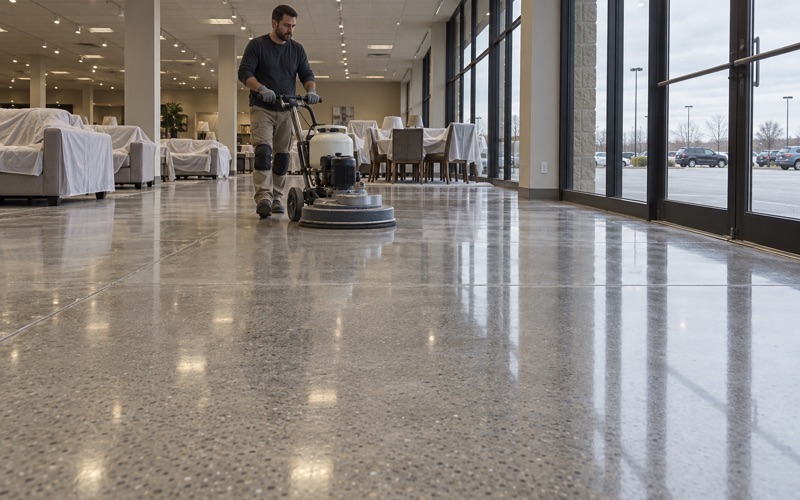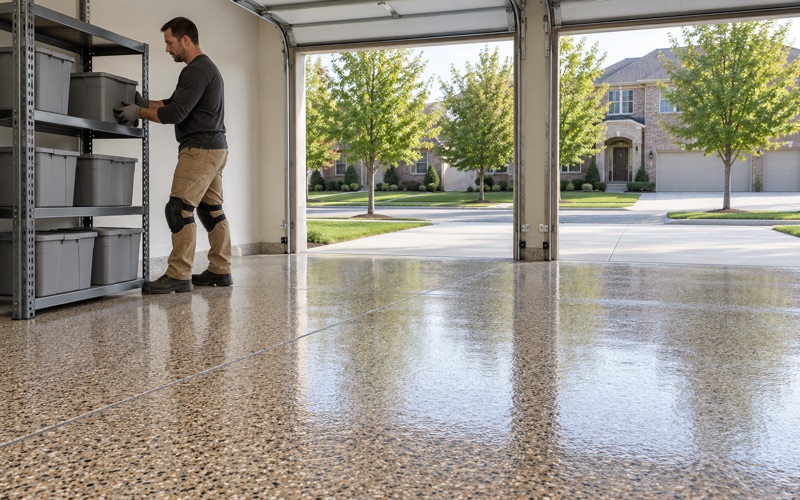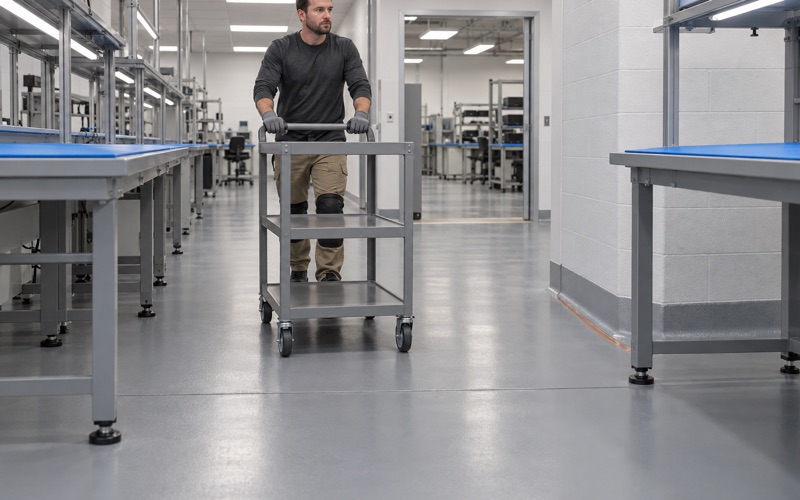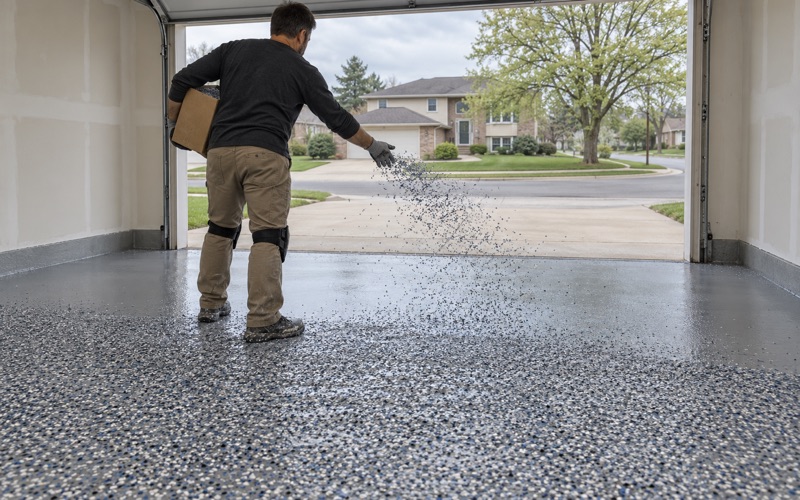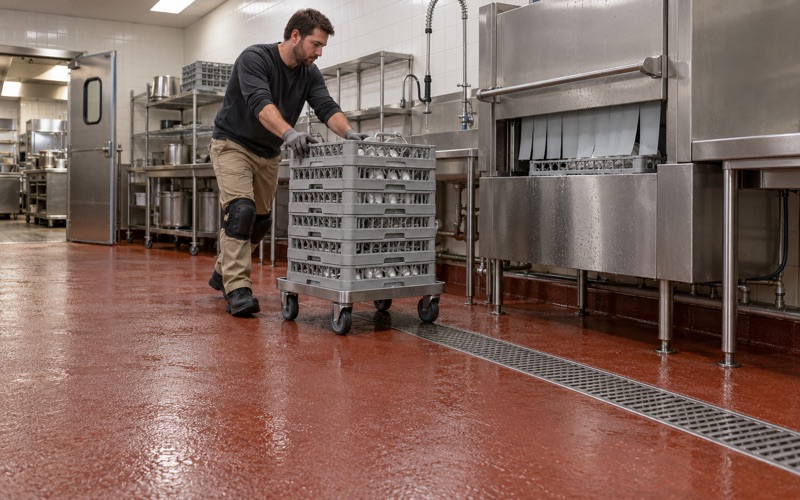
Orland Park Epoxy Flooring installs epoxy flooring in Crestwood for the rooms where a business cooks, and after more than 20 years on commercial slabs we treat a kitchen floor as part of how grease gets handled. The floor under a fryer line is where spilled fat sits until somebody cleans it up. How that floor is built decides whether the fat gets scraped into a bin or pushed into a bucket.
This page is about that one question for restaurant and bar kitchens: what a seamless, coved, nonabsorbent floor changes about cleanup, and where its job ends. We are a flooring contractor, so we will be plain about the parts of grease control that belong to a plumber and an interceptor rather than to a coating.
Every proposal we write names the product line, the coat count and the finished thickness, so an owner or a health inspector can hold the floor up against the paperwork. The rest of this page explains why the details in that proposal matter in a working kitchen.
Grease in the Sewer and Where It Starts
What the village wrote down
At the Committee of the Whole meeting on September 30, 2025, Crestwood’s minutes recorded that The Pointe Bar & Grill at Cal Sag Road and 127th Street “has been clogging up the sewer with their cooking grease.” That is the village’s sentence, not ours, and we have no relationship with that business. A travel directory lists a Point Sports Bar & Grill at 12713 Cal Sag Road, an address the Census geocoder places inside the village.
We raise it because it names a problem every kitchen on the Cal Sag Road corridor shares. Grease does not need a broken pipe to reach the sewer. It travels a little at a time in whatever water carries it out of the building, and one of the steadiest carriers in any kitchen is the mop bucket.
The floor under the fryer and the line
Fat leaves a fryer basket, a flat-top or a sheet pan in drips and splashes, and most of it lands on the floor within a few feet of the equipment. Over a shift it gets walked into a film that spreads toward the dish area and the walk-in door. On a bare or worn concrete slab some of it soaks into the surface, and what stays on top is slippery.
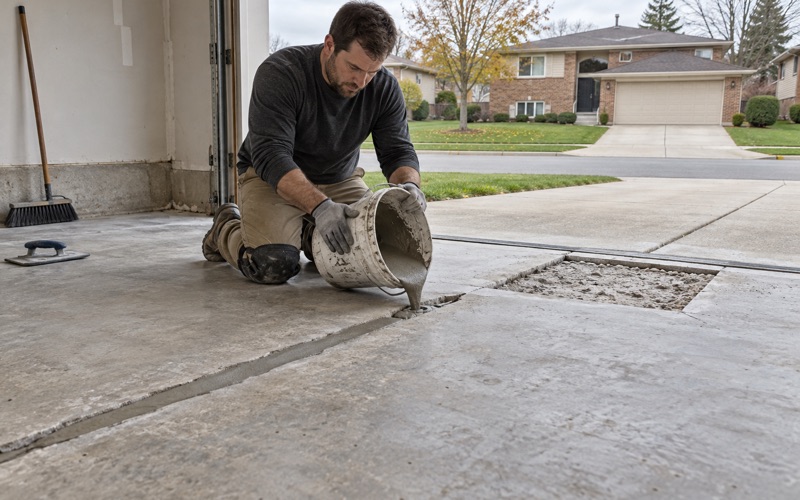
That is why the area under the cook line is the first place we look on a kitchen walkthrough. We map cracks, spalls and failed old coatings there before anything else, because a broken floor holds grease in every crack. When the slab itself needs repair or replacement before it should be coated, we say so in writing.
Why mop water carries the grease
Whatever fat is still on the floor at close leaves the room in mop water. A mop picks up a layer of grease, gets wrung into a bucket of hot water and soap, and the bucket goes down a drain. Repeat that every night across a busy grill and the floor becomes a quiet, steady source of kitchen fats, oils and grease heading for the plumbing.
The less grease sitting on the floor when the mop comes out, the less of it rides along. That is the part a floor finish can influence, and it is a smaller and more honest claim than the ones a reader sometimes hears from coating sellers.
Looking for epoxy-flooring closer to Midlothian? See Midlothian Epoxy-Flooring.
Mop Water, the Mop Sink and the Food Code
Where mop water is allowed to go
The FDA Food Code 2022, section 6-501.15, says food preparation sinks, handwashing sinks and warewashing equipment may not be used for the disposal of mop water and similar liquid wastes. In practice that means a kitchen needs a proper place to dump a mop bucket, and the dirty water should never be poured into the prep sink because it was closer.
Trade practice for food service, drawn from guidance written outside Illinois, sends mop water to a drain connected to the grease trap or interceptor. We mention that as common practice, not as a Crestwood or regional rule. Where the mop sink drains is a plumbing question for the owner and their plumber, and we keep our scope away from it.
The rule on sawdust and absorbents
Section 6-501.17 says sawdust, wood shavings, granular salt, baked clay, diatomaceous earth or similar materials may not be used on floors. The exception in section 6-501.13 allows a small amount of absorbent compound applied immediately before spot cleaning a liquid spill. A kitchen cannot simply bed its floor in sawdust under the fryers and sweep it up once a week.
That leaves cleanup to tools and to the floor surface. If absorbents are limited to quick spot work, the floor has to release grease to a squeegee, a scraper and a dry towel. A porous or broken slab does not do that well, and a seamless coated one does.
Who reviews a kitchen floor here
Food plan review for suburban Cook County businesses generally runs through the Cook County Department of Public Health, and we found no separate village health department. Treat that as our reading, not a confirmed village statement, and ask the county early. The village Building and Zoning Department on Cicero Avenue handles permits, and its list does not mention floor coatings either way.
The village asks contractors working in Crestwood to register first and file an insurance certificate naming the village as additional insured. We complete that registration before we book the job. Illinois licenses no flooring or coatings contractor, so the village’s own rules are the ones we check.
Scrape and Wipe First on a Seamless Floor
Coved and sealed at the walls and drains
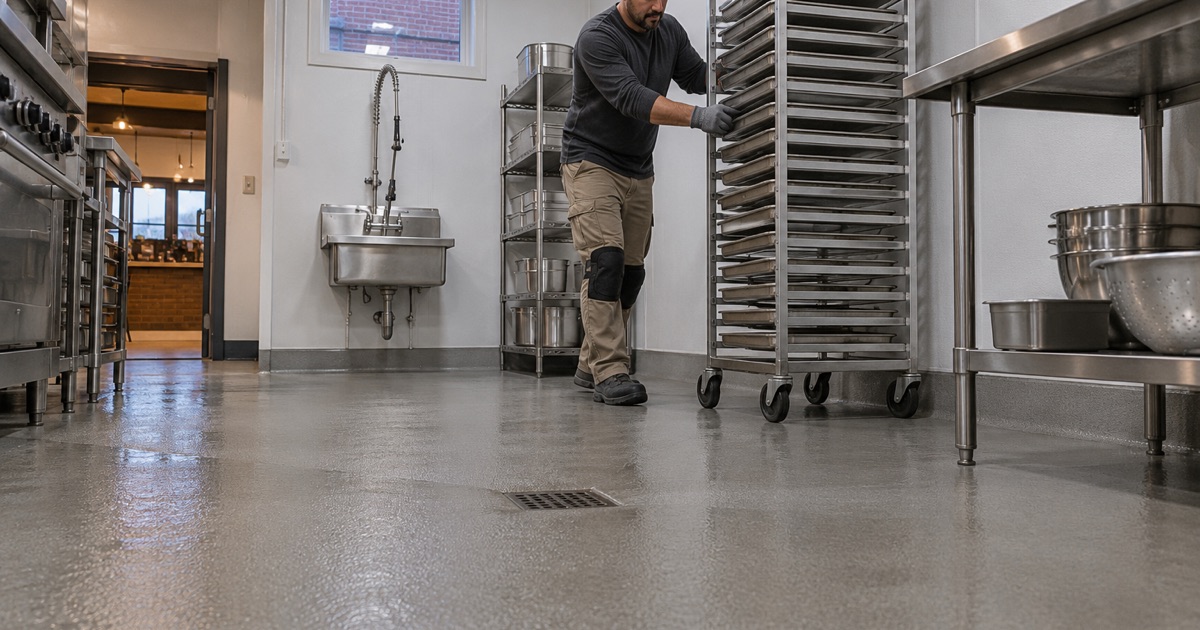
The Food Code, section 6-201.13, asks that floors cleaned by water flushing have drains, be graded to drain, and have floor and wall junctures that are coved and sealed. Other floors still need coved junctures closed to no larger than 1 millimeter. Section 6-101.11 calls for nonabsorbent floors where moisture is routine, and a fryer line qualifies.
We build that cove from the same resin system as the floor, carried several inches up the wall so there is no seam at the base for grease to pack into. The finish is also sealed tight around floor drain bodies and equipment legs, because those edges are where a mop leaves a dark ring.
Systems that stand up to hot fat and hot water
For a cook line we usually look at urethane cement, which tolerates thermal shock from hot oil and the hot-water washdowns that follow. In drier prep and storage areas a 100% solids epoxy is often enough. The proposal names which system goes in which room, along with the product line, the number of coats and the finished thickness.
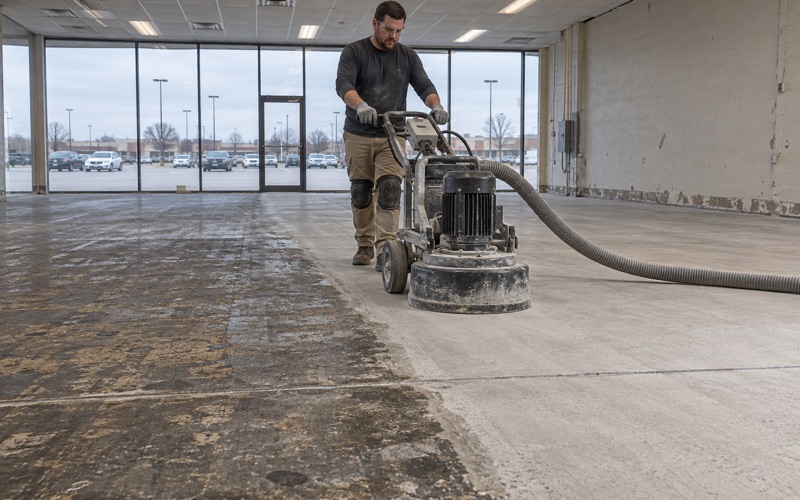
The slab is opened with diamond grinding or shot blasting, never an acid etch, so the coating has a measurable ICRI surface profile to grip. Grinding dust is captured at the machine with a vacuum rather than rinsed toward a floor drain, which matters in a kitchen whose drains already carry enough.
Texture that stays cleanable
A greasy floor has to be slip resistant and still release fat to a squeegee. Section 6-201.11 of the Food Code allows antislip floor applications for safety reasons, and we specify that texture by the quartz aggregate broadcast and topcoat used rather than promising it as a slogan. Coarser near the fryers, finer in the walkways, so the floor cleans without trapping grease in the grit.
Before the price is final we run a moisture test, usually ASTM F2170 in-situ relative humidity probes, and write the result into the scope. Moisture is also the first exclusion we name when we explain what the coating warranty leaves out, before the job is sold.
Working around service hours
A bar and grill cannot close for a week. We phase kitchen floors around opening hours, with overnight and weekend windows, and we set cure times by slab temperature and dew point rather than the calendar. The owner knows in advance which stations go out of service and when the floor can take foot traffic and equipment again.
What a Coating Does Not Do
The interceptor’s job
A floor coating does not stop grease from reaching the sewer, and it does not take the place of a grease interceptor or trap. Those devices, the plumbing feeding them and the pumping schedule that keeps them working are what actually catch fat before it leaves the building. A coated floor only changes how much grease ends up in the mop bucket on its way there.
We will not sell a floor as a fix for a sewer complaint, and nobody reading the village minutes should expect one to be. If grease is reaching the line, the first calls are to a plumber and a grease hauler. The floor comes after, as one part of a cleanup routine that works.
Crestwood’s other bar-and-grill kitchens
The Pointe is not the only grill in town. Village minutes from March 2026 mention the Pressure Bar & Grill and Harold’s Bar & Grill, both now running as bars after losing their gaming. Each of those kitchens faces the same arithmetic: fat on the floor, a mop at close, and a drain that carries whatever the bucket holds. A floor built for scraping makes the first step easier in every one of them.
What we put in writing before work starts
For a Crestwood kitchen the written scope lists the moisture result, the crack and spall map, the coating system for each area, the cove height, and the texture by broadcast and topcoat. It also states plainly that grease control stays with the interceptor and the plumbing. That way the owner, the inspector and the cook staff all know what the new floor is meant to do.
- 20+ Years on Concrete
- Moisture Tested Before Pricing
- Written Specs on Every Quote