
Orland Park Epoxy Flooring provides concrete grinding in Orland Park, IL, serving surrounding cities including Palos Heights, Mokena, Worth, Palos Hills and Crestwood. In 20+ years of coating floors, we have found that the quality of the grind decides the life of the floor more than any product on the label, so every slab we coat is opened mechanically first.
Concrete grinding removes the weak, smooth top layer of a slab, along with old coatings, sealers and contamination, and leaves a textured surface a primer can soak into. Done well, it gives the coating something real to grip. Done poorly or skipped, it leaves a floor that peels in the tire tracks or lifts at the edges within a season.
We choose between diamond grinding and shot blasting based on the slab, the coating and the space. Dust is captured at the machine with a vacuum rather than swept or rinsed toward a floor drain, and the profile we reach is checked against the coating’s requirements before any product is mixed.
Diamond Grinding Versus Shot Blasting
Diamond Grinding
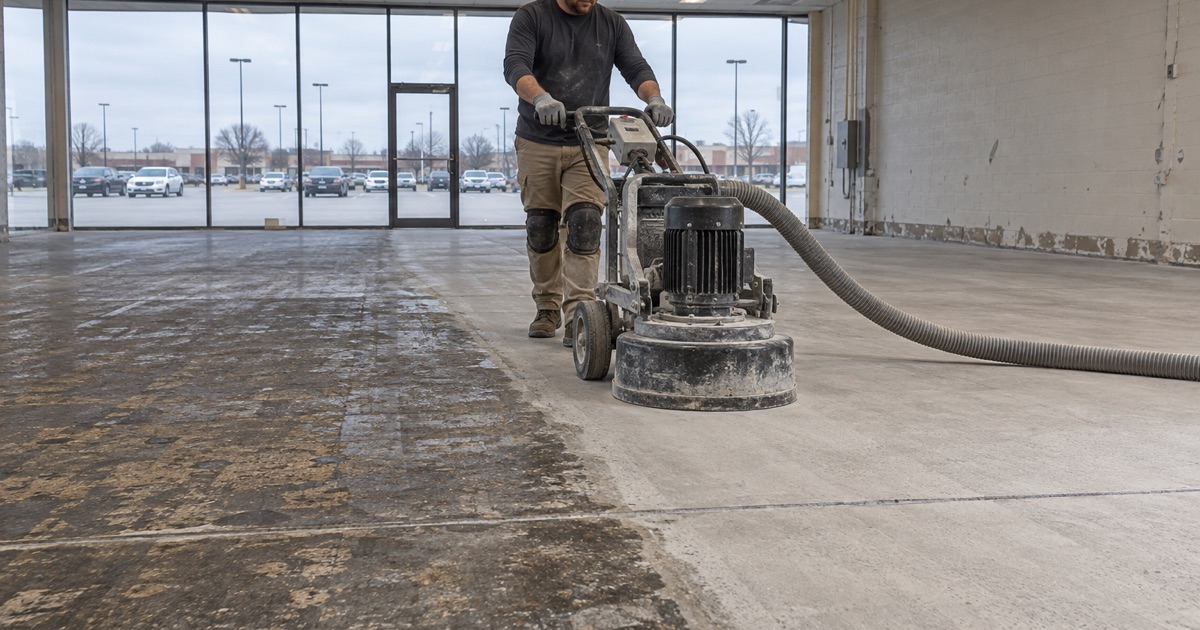
A diamond grinder uses rotating heads fitted with metal-bond diamond segments that cut into the concrete surface. It handles edges, uneven floors and coating removal well, and it can flatten small lips and high spots at cracks or joints. Most garage and basement floors we coat are diamond ground, because the machines fit through doorways and around obstacles and the finish is easy to control.
Shot Blasting
A shot blaster throws small steel shot at the slab, then recovers the shot and the dust through a vacuum. It is fast on large, open floors and produces a uniform, rougher profile that suits thicker coatings and urethane cement. We use it on commercial and industrial floors, warehouses and big garages where speed and a heavier profile matter, and we finish the edges with a grinder.
Why We Do Not Acid Etch
Acid etching is the method many kits and some contractors use, because it is cheap and fast. It leaves a shallow, inconsistent surface, does little against sealers or curing compounds, and depends on perfect neutralizing and rinsing. The rinse water also has to go somewhere, which usually means toward a drain or the driveway. Mechanical preparation avoids every one of those problems.
Reading the Concrete Surface Profile
ICRI CSP Profiles
The International Concrete Repair Institute publishes a set of concrete surface profile references, numbered CSP 1 through CSP 10, from nearly smooth to very rough. Coating manufacturers state which profile range their products need, and we compare the prepared slab with those references rather than judging roughness by feel.
Matching the Profile to the System
Thin coatings and sealers need only a light profile, while thick epoxy builds, self-leveling layers and urethane cement need a heavier one. Too little profile and the coating has nothing to hold; too much and a thin coating can telegraph the texture or leave peaks poking through. We set the target profile from the product data sheet and prepare the slab to match it.
Checking the Slab After the Grind
Grinding often reveals what was hiding under a sealer or coating: hollow spots, soft concrete, hairline cracks and stains that went deeper than expected. We walk the prepared floor before priming, sound suspicious areas and mark repairs, so the crack and spall work happens on a clean, open surface. If the grind exposes a slab that should be repaired or replaced rather than coated, that is the point where we tell you.
Removing What Is Already on the Floor
Old Coatings, Paint and Sealers
A new coating is only as strong as whatever it is bonded to, so failing paint, worn epoxy and clear sealers usually have to come off. We grind or blast them away and check that bare concrete is exposed across the floor. A well-bonded older epoxy can sometimes be ground and recoated, and we test it before deciding.
Carpet Glue, Tile Adhesive and Mastic
Basements and commercial spaces often carry carpet glue, vinyl tile adhesive or black mastic from earlier floors. These clog diamonds and must be removed before coating or polishing. Older black adhesives may contain asbestos, so we have them tested before any grinding. If the test is positive, a qualified abatement contractor removes it first.
Oil, Fluids and Salt Residue
Garage and shop floors carry oil drips, coolant, tire residue and the salt film that winter brine leaves behind. Grinding removes what sits at the surface, but oil can soak deeper into the concrete. We degrease heavily stained areas, grind again and test the spot before coating, and where contamination remains we use a primer rated for it rather than hoping the coating will hold over it.
Flattening Lips, Trip Edges and Ridges
Cracked slabs often have one side higher than the other, and old patches or poured additions can leave ridges. Grinding can knock down those lips and smooth transitions between floor areas, which matters both for safety and for decorative finishes like metallic epoxy that show every high and low spot. Larger elevation changes may need a patching or leveling compound after grinding.
Dust, Slurry and the Air in the Building
Vacuum at the Machine
Concrete dust contains fine silica, and it travels through a house or building quickly. Every grinder and shot blaster we run is connected to a vacuum at the machine, so dust is pulled away as it forms. In attached garages and basements we also close and seal doors to living areas and run fans to push air outdoors.
Keeping Slurry Out of Drains and Storm Inlets
Wet grinding and rinsing create slurry that can clog floor drains and should never be sent toward a storm inlet. We grind dry wherever possible and contain and pick up any slurry when water is used. Collected dust and debris are bagged and disposed of properly rather than washed into the driveway or the street.
- 20+ Years on Concrete
- Moisture Tested Before Pricing
- Written Specs on Every Quote