Orland Park Epoxy Flooring has spent more than 20 years installing epoxy flooring in Alsip and across the south suburbs, and the floors we think hardest about are the ones that never get a chance to dry. A wet room punishes every seam in a floor. Water finds the joint, the grout line or the hairline crack, and the damage starts underneath where nobody sees it.
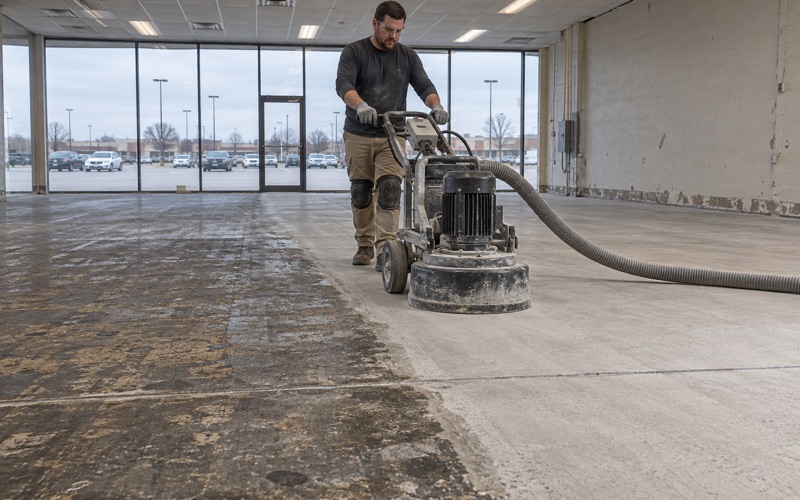
That is why our approach to a wet floor begins with the slab rather than the color chart. We open the concrete with a diamond grinder or a shot blaster, never an acid etch, and we map cracks, spalls and old coatings before anything is priced. When a slab needs repair before it should be coated, we say so in writing.
The proposal you receive names the product line, the number of coats and the finished thickness, so the floor on the ground can be checked against the paper. The slip-resistant texture is specified by the broadcast and the topcoat rather than promised as a slogan, and that matters most on a floor that is wet every working day.
A Recycled-Paper Mill on Pulaski Road
Alsip MiniMill and the Industrial Corridor
Alsip is a working village, and some of that work involves a great deal of water. Alsip MiniMill sits at 13101 South Pulaski Road, an address the US Census Geocoder places inside the village in Worth Township. The village’s 2024 hazard-mitigation annex describes it as a producer of corrugating medium using Old Corrugated Containers (OCC), which is recycled cardboard turned back into the fluted layer inside new boxes.
The Metropolitan Water Reclamation District carries the mill on its Significant Industrial Users list as of September 1, 2026, under 40 CFR 430, the federal category for pulp, paper and paperboard. We have no relationship with the mill and have never worked there. We mention it because it shows plainly what a floor in a permanently wet room is up against.
Cardboard, Water and a Slurry That Is Mostly Water
A June 30, 2021 inspection by US EPA Region 5 describes how the process works. Corrugated cardboard is fed to a pulping tub and broken down into a pulp slurry of about 5 percent solids, then screened and centrifuged to remove material that is not pulp before it reaches the paper machine. Put another way, the stock headed for the machine is roughly 95 percent water.
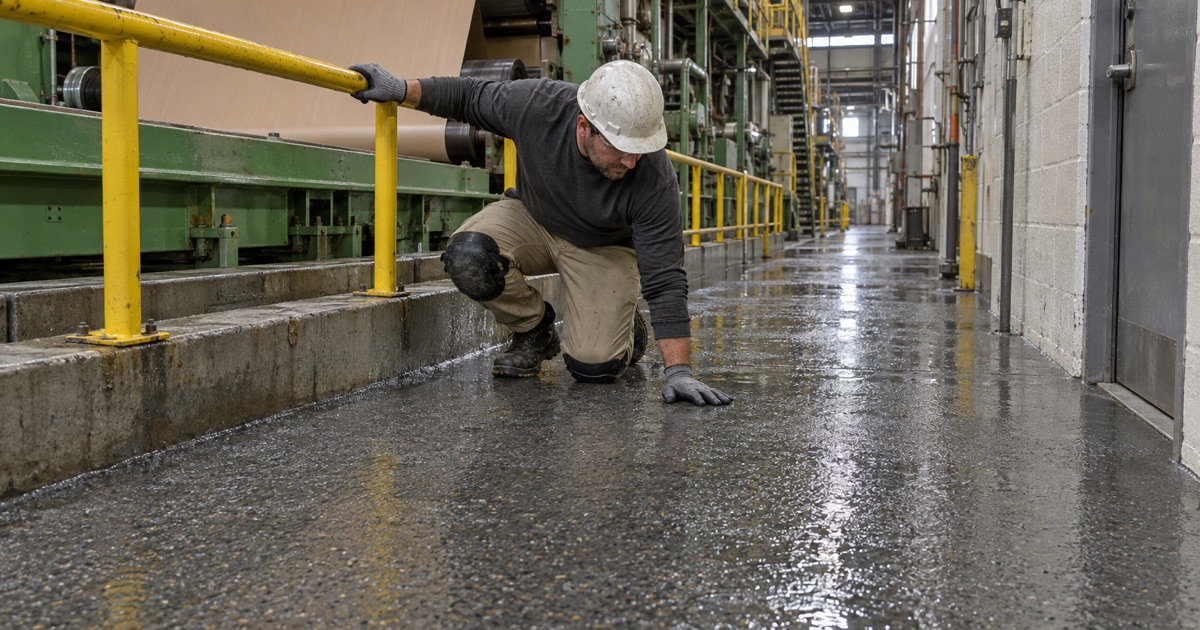
Water at that ratio does not stay where it is meant to. It splashes, drips from equipment and runs across the floor during every wash-up. The floor beside a paper machine is wet for its whole working life, and a floor that is never dry behaves very differently from one that gets mopped once a day and left alone to dry out.
Looking for epoxy-flooring closer to Country Club Hills? See Epoxy-Flooring Services in Country Club Hills.
Why Grout Lines and Joints Fail First on a Wet Floor
Water Wicks Into Every Seam
Most floor failures in wet rooms start at a seam, not in the middle of a tile or a coated field. Grout lines are porous compared with the tile they hold, and control joints and cracks in the slab are open paths straight down. Constant water works into those paths, carries whatever it picked up along the way, and keeps the material underneath saturated.
Once the bedding under a tile or a thin coating stays wet, the bond weakens. Edges lift, corners chip and pieces spall loose. On a production floor that is more than a cosmetic issue, because a raised tile edge or a loose flake of coating becomes a trip hazard in a room where people already walk on a wet surface.
What One Paper-Mill Case Study Showed
A trade case study published by Chesterton, from an unnamed paper mill and not from Alsip, describes this exact failure. A tiled floor beside a paper machine experienced extensive cracking and delamination that created a tripping hazard. The root cause was stated plainly: “Contaminated wash water wicks in through grout lines,” leading to spalling of the tile.
The repair in that study removed the tile, ground the slab to ICRI CSP 3-4, leveled it with a 6-9 mm epoxy grout, applied a 15-20 mil coat with broadcast aggregate for slip resistance and finished with a sealer coat. The client reported the area almost completely intact after two years. We cite it as an example of the method, not as a promised result in any building here.
Thin Coatings Fail the Same Way
A thin, rolled-on paint or a single coat of water-based epoxy has the same weakness as grout, only spread thinner. Every pinhole, every missed patch over a crack and every unfilled joint is a spot where water gets under the film. On a slab that stays damp, the coating peels outward from those points, and the floor ends up patched again and again.
This is also why we are careful with words. A coating is not waterproofing and it is not flood protection, and we do not sell it as either. What a well-built system does is give standing water and wash water a continuous surface with nothing to wick into, which is a narrower and more honest claim.
Level It, Seal It, Texture It
Profile and Moisture Before Anything Else
A wet-area floor is only as good as its bond to the concrete. We grind or shot blast to an open profile measured on the ICRI CSP scale, so the primer has real texture to grip, and we capture grinding dust at the machine with a vacuum instead of rinsing it toward a floor drain or a storm inlet. Old coatings and failed tile come up first, along with anything loose beneath them.
Moisture testing is written into the scope before the price is final. Depending on the slab, that may mean ASTM F2170 in-situ relative humidity probes, ASTM F1869 calcium chloride testing or an ASTM D4263 plastic sheet check as a first look. If the readings call for it, a moisture-mitigation primer goes down before the build coats, and moisture is the first warranty exclusion we explain.
Leveling Out the Low Spots
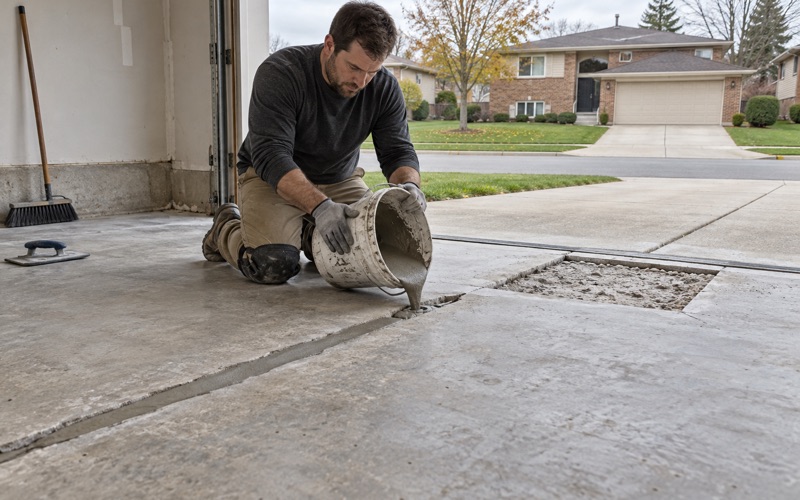
Water collects in low spots, and a puddle that sits for hours is a puddle that finds every weakness. Before the coating system goes on, we fill cracks and dormant joints, rebuild spalled areas and level dips with an epoxy mortar or leveling grout so water runs off instead of pooling. The goal is a floor with no grout lines, no open seams and no shallow pockets.
On floors that take hot water or harsh wash routines, urethane cement is often a better base than a standard epoxy, and we recommend it when the conditions call for it. Joints that are designed to move are honored with a flexible sealant rather than buried under rigid coating, where they would simply crack through again.
Broadcast Texture for Wet Footing
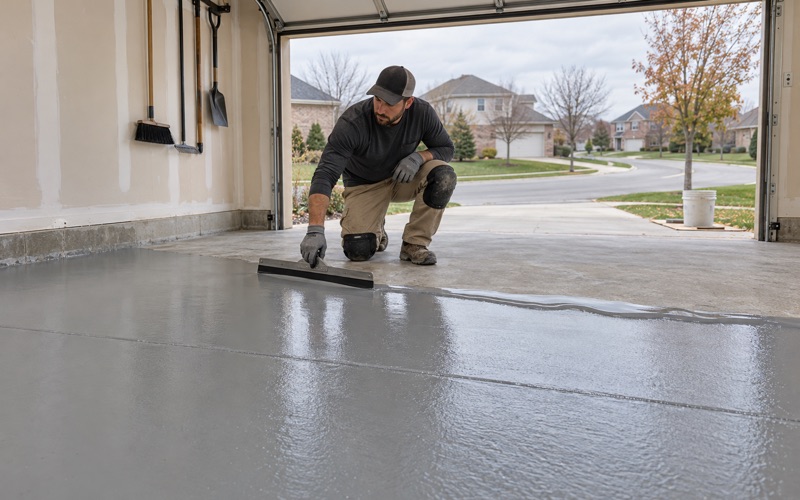
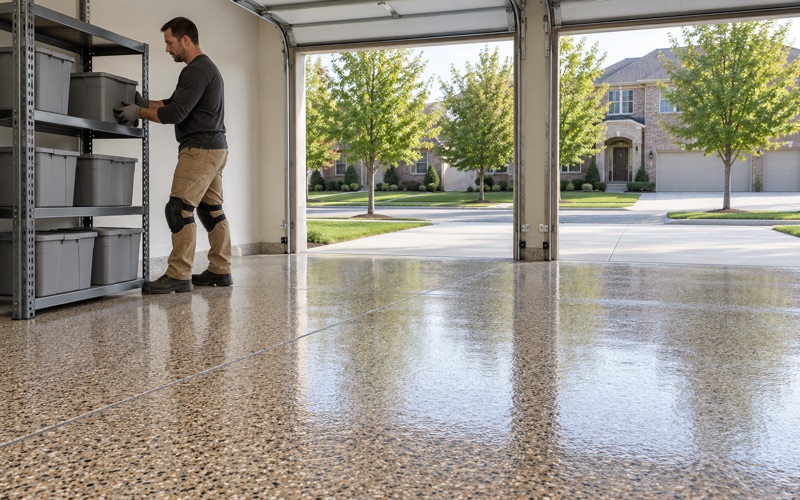
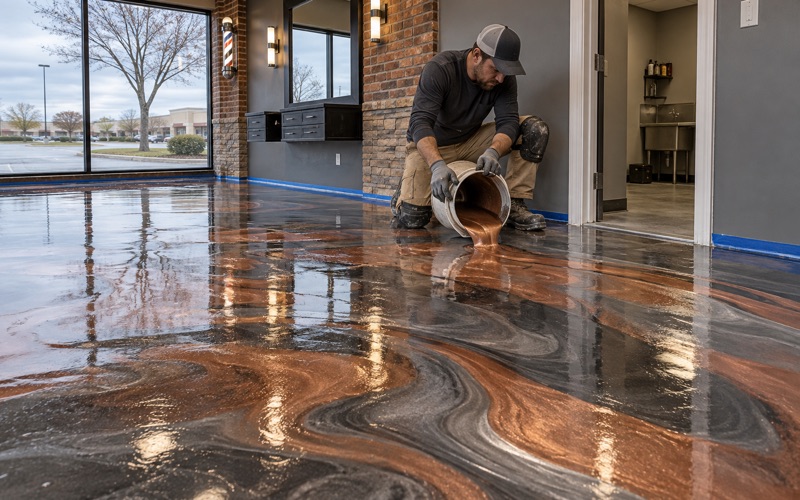
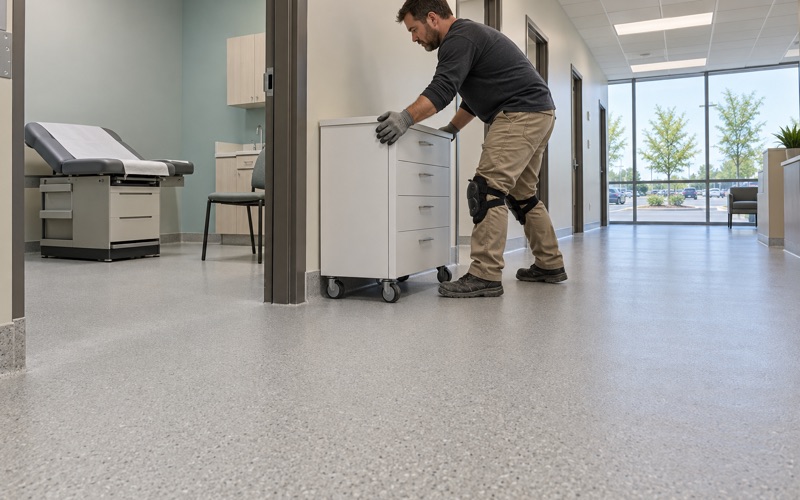
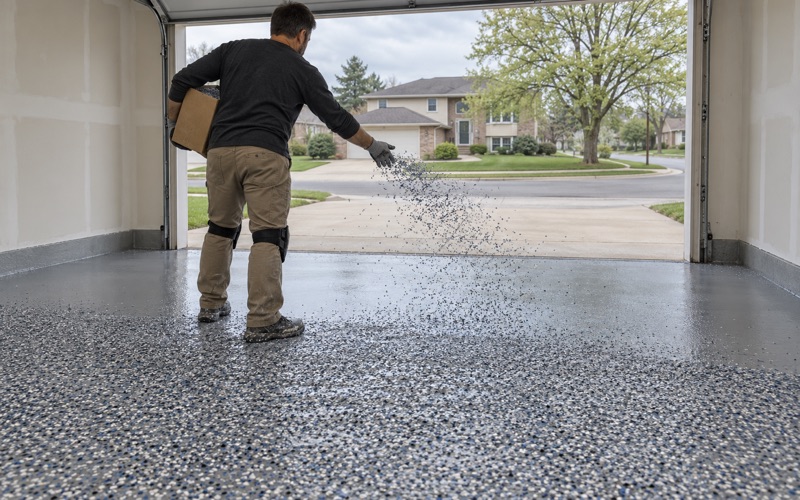
Slip resistance on a wet floor comes from texture, and texture comes from the broadcast. Quartz aggregate broadcast into a wet coat of 100% solids epoxy, then locked down with a topcoat, gives footing that holds when the floor is wet. The size of the aggregate and the thickness of the topcoat set how aggressive the surface feels underfoot and how easily it cleans.
That balance is something we talk through rather than guess at. Too little texture and the floor is slick; too much and it holds dirt and shreds mops. We name the broadcast and the topcoat in the proposal, so the slip-resistant finish is a defined part of the job rather than a word in a brochure.
Wet Floors Elsewhere in Alsip: Wash Bays, Utility Rooms and Laundries
The lesson from a paper-machine floor scales down to ordinary buildings. The village describes itself as about 60 percent residential and 40 percent commercial and industrial, and both sides have rooms that stay damp: truck and equipment wash bays, utility rooms, basement laundries and mudrooms where winter boots drip all season.
Commercial Wash Bays and Utility Rooms
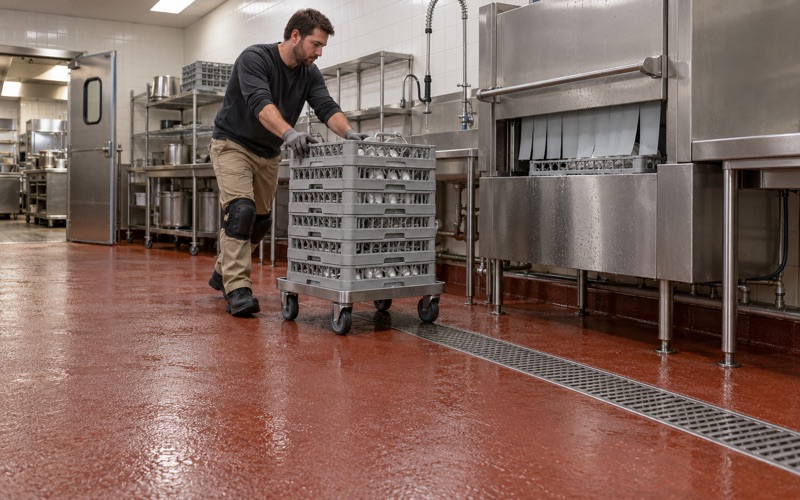
A wash bay along the Pulaski Road corridor sees the same cycle as a mill floor on a smaller scale: water, grit and cleaning chemicals, day after day. A seamless, broadcast-textured system carried a short way up the walls keeps water off the seam where block meets slab. We phase commercial work around operating hours, using overnight and weekend windows when a space cannot close.
Utility rooms with water heaters, boilers or mop sinks benefit from the same thinking. The floor there does not need to be decorative; it needs to shed water, resist the occasional chemical spill and stay flat enough that nobody catches a toe on a lifted edge.
Basement Laundries at Home
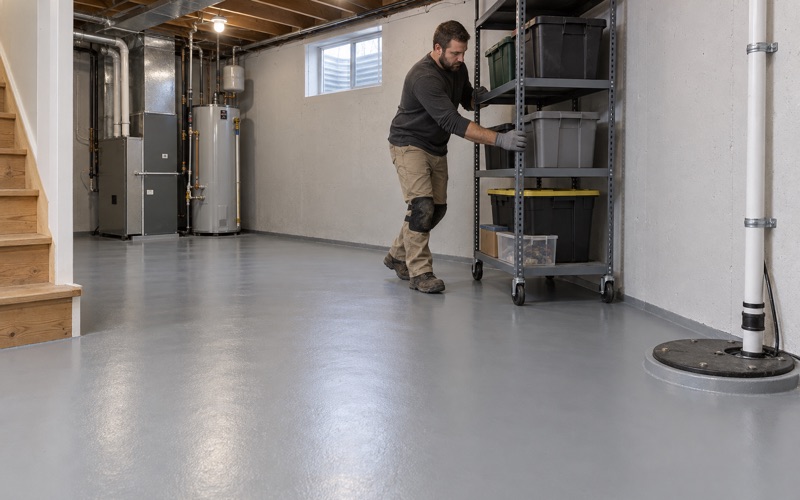
At home, the wettest room is usually the laundry, especially in a basement. Washer overflows, a dripping utility sink and condensation on cold concrete keep the slab damp more often than people realize, and a tiled laundry floor shows the same grout-line wear a mill floor does, only slower. A seamless epoxy floor with a light quartz broadcast wipes clean and keeps footing when it is wet.
Basement slabs carry moisture from below as well, so the moisture test matters even more there. We tell homeowners plainly when readings mean the slab needs mitigation first. We also never present a floor coating as radon reduction, because in Illinois that is licensed mitigation work under IEMA.
Paperwork and Timing
The Village of Alsip collects a contractor license fee, and Illinois licenses no flooring or coatings contractor at the state level, so we confirm the village’s own requirements before a job is booked. Home jobs over the state threshold get a written contract and the Home Repair: Know Your Consumer Rights pamphlet before any grinding starts, under the Illinois Home Repair and Remodeling Act.
Cure schedules follow slab temperature and the dew point spread at the surface rather than the calendar. An unheated garage or wash bay in deep winter is told to wait, because a coating that cures cold and damp is the first one to let go on a floor that stays wet.
- 20+ Years on Concrete
- Moisture Tested Before Pricing
- Written Specs on Every Quote